
How to Know When a Tree Is Dangerous: Eastern Cape Homeowner Guide
Trees add beauty and value to your property — but when a tree becomes unstable, diseased or structurally weak, it can turn into a major safety hazard. In the Eastern Cape, strong winds, coastal weather and seasonal storms make dangerous trees even more unpredictable.
1. Visible Leaning or Sudden Tilt
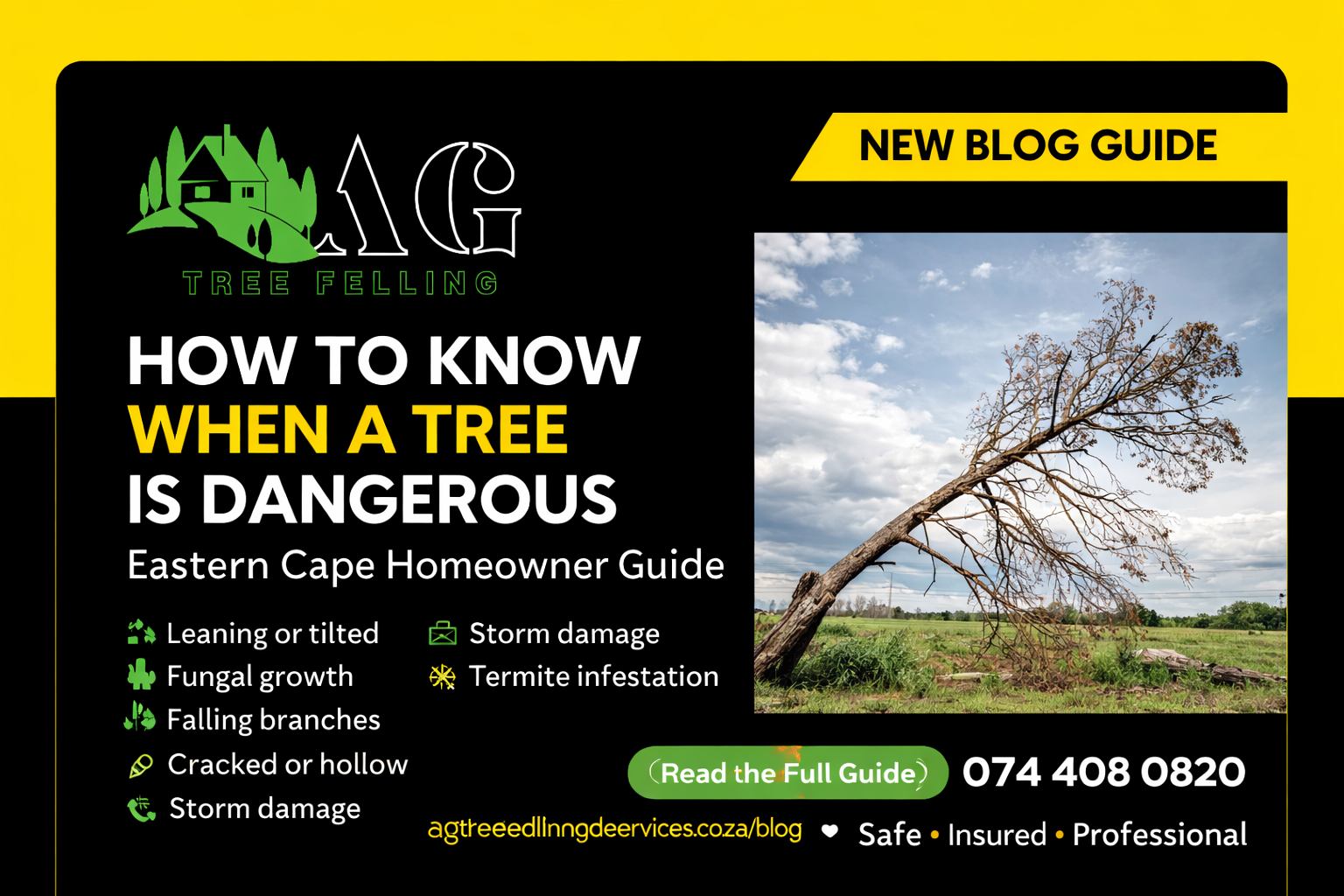
A tree that suddenly leans to one side is a major red flag. This usually means root failure, soil erosion or internal decay. If the lean appeared after heavy wind or rain, the tree may fall without warning.
2. Fungal Growth at the Base
Mushrooms or fungal clusters around the trunk indicate internal rot. Even if the tree looks healthy outside, the inside may be hollow and unstable.
3. Dead or Falling Branches
Dead branches — also called widowmakers — can fall without warning. If one branch is dead, more may follow.
4. Cracks, Splits or Hollow Sections
Deep cracks in the trunk or major limbs show structural failure. A hollow trunk is even more dangerous because it has no internal support.
5. Storm Damage or Uprooted Roots
Eastern Cape storms can loosen roots or break major limbs. Look for soil lifting, exposed roots or cracked ground around the base.
6. Termite or Borer Infestation
Insects weaken the internal structure. Signs include sawdust piles, bark peeling and small holes in the trunk.
Related Reading: DIY vs Professional Tree Felling — Why It Matters
When to Call a Professional
Contact a certified tree felling team if you notice leaning, cracks, dead branches, fungus, uprooted roots or trees touching power lines.